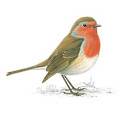
After all my kvetching yesterday, the sun has come out in glorious force--it should get up to 70 today! Gabriel has a half day on Wednesdays, so it's perfect timing for us to have a picnic and some ice cream and wander around outside with just him and not the baby, who is happy as a clam at daycare (although I have an ongoing struggle to get them to offer bottle before food and not vice versa...I'm afraid Eloi's weaning and I don't want it to be because they aren't doing what I ask them to...).
Somehow, on Monday morning, Gabriel got fixated on the idea of going to the beach. The Mister kind of played along as they had breakfast, which must have turned a pretend scenario into what to him was a fact and concrete plan for the day. So when I started making his school lunch, he cried and said "We not going to school," and when I said very clearly that indeed we were, he burst into genuinely devastated sobs. "We goinna beeeeeach!" (The plan also somehow involved a truck, but I wasn't around for the development of that so not sure how it fits in.)
Poor kid. I wish we were going to the beach too. He has remained stuck on the idea, to the point where he is reluctant to enter his classroom in the morning (it's not the beach) and asks to go to the beach as soon as I pick him up from school. We've explained that when we fly to Boston and visit grandpa and grandma in a few weeks THEN we can go to the beach, but though he gets that idea and talks about going on the airplane to go to the beach, the amount of time he has to wait until then is hard to understand for a three year old.
The latest development in the ongoing saga occurred this morning, when I was dressing him for school. He balked at taking off his pajamas because he saw the clothes I had picked out, and said, "I want to wear a...a... suitcase." Confused, I thought maybe he was thinking about packing and told him we'd put his clothes in a suitcase when we fly to America, but he said no, WEAR the suitcase. To go to the beach.
AH, I said. A swimsuit?
Yeah! With turtles on it. (He is remembering his swim trunks from last summer, which he hasn't seen since last August.)
SUITcase, swimSUIT. Language is funny, kid.
(In unrelated language funnies, he has taken to asking for "cozy bread." Which means, NOT toast or dry bread, but soft. Which makes perfect sense--all the other things we describe as cozy, like his bathrobe, a blanket, his fleece pants, and snuggling on the couch, are soft and squishy too. So cozy bread it is.)
24 April 2013
Suiting up

24 May 2012
All delight unclouded
Suddenly, Belgium has decided that spring-into-summer is here, and we've had a few days of sunny, even muggy weather in the upper 70s, without any rain (even though rain was predicted). This is, of course, a welcome change and one that makes me more energetic and ready to have this baby! I've discovered that I have exactly four short-sleeve or sleeveless maternity shirts, which should be enough to get me by--although this will be annoying in the short term (especially since even these shirts barely cover my belly any more), it makes me glad that I didn't go out and buy more spring maternity wear, since it's really not worth it for just a couple of weeks.
Gabriel comes home from daycare sweaty and simply coated in sand from head to toe, since they spend the days outside and there's a large sand pit to play in. But he's cheerful and giggling and growing and every day saying new words and sentences--especially adding more verbs into the mix. "Is" is actually pretty new, and I adore how he pauses before and after saying it, giving the "s" a nice long hiss. "Dat...issss...broken, mama!" He came inside from the yard the other day proudly bearing a scraggly bouquet of dandelions minus their seeds, and gave them to us. Candles! he said, because we blow on them. He's also potty training basically on his own, since I had kind of assumed it wouldn't happen before the baby and we were just following his pace. Even a few weeks have made a big difference, and now we have the dilemma of whether to put him in underwear or continue with diapers to get us through the newborn stage.
This week and next I'm studying for my Dutch exams, and there is an awful lot of material to cover. I thought, going into this and knowing that the term would end just before my due date, that Dutch would help distract me from pregnancy/baby thoughts, but the reverse is true. I'm not exactly a dedicated student right now and I kind of figure that I'll do as well as I'll do on the exams (if I even make it to the last one!).
Meanwhile, I'm still having poetry discussion group and book club meetings and doing other fun things. We happen to be discussing Rukeyser again this week, and since I'm waiting for our baby, I especially enjoyed "Nine Poems for the Unborn Child." Here are a couple of sections that I liked...
Nine Poems for the Unborn Child
by Muriel Rukeyser
3
There is a place. There is a miracle.
I know the nightmare, the black and bone piano,
The statues in the kitchen, a house dissolving in air.
I know the lilac-turreted cathedral
Taking its roots from willows that changed before my eyes
When all became real, real as the sound of bells.
We earthly are aware of transformation;
Miraculously, life, from the old despair.
The wave of smooth water approaches on the sea-
Surface, a live wave individual
Linking, massing its color. Moving, is struck by wind,
Ribbed, steepened, until the slope and ridge begin;
Comes nearer, brightens. Now curls, its vanishing
Hollows darken and disappear; now high above
Me, the scroll, froth, foam of the overfall.
8
Child who within me gives me dreams and sleep,
Your sleep, your dreams; you hold me in your flesh
Including me where nothing has included
Until I said : I will include, will wish
And in my belly be a birth, will keep
All delicacy, all delight unclouded.
Dreams of an unborn child move through my dreams,
The sun is not alone in making fire and wave
Find meeting-place, for flesh and future meet,
The seal in the green wave like you in me,
Child. My blood at night full of your dreams,
Sleep coming by day as strong as sun on me,
Coming with sun-dreams where leaves and rivers meet,
And I at last alive sunlight and wave.
12 May 2012
Say my name
Before Gabriel was born, we talked about what we would like to be called as parents. Most parents probably have an obvious answer to this question, or don't even think about it, but since we were working with two languages, and we both had some opinions about parental nicknames, there were a few things to discuss.
In Catalan, most parents we know use mama/papa, but M. grew up using mare/pare (pronounced mar-uh and par-uh), which literally mean mother and father but sound, in terms of formality, closer to mom and dad. As per his experience, he preferred, then, using mare and pare--or at least preferred the latter to the "papa" option.
Meanwhile, I didn't particularly like mommy/daddy, although I'm not sure why, since that's what I called my parents when I was a child. Maybe it didn't seem to suit us or seemed too American for our little international family. I liked mama and papa, but if M. didn't like papa, I thought we should just go with mom and dad from the beginning. So, our plan was that we would be--and refer to each other when speaking to our baby as--mom (or maybe mama) and dad in English, or mare and pare in Catalan.
As I'm sure you've guessed by now, the best laid plans regarding unborn children are always likely to alter radically in the face of actual children and their actual quick little minds.
When Gabriel started speaking, he called us "mama" and "dada" and honestly, I have no idea how that came about. I suppose we started out by referring to one another as mom and dad and he baby-fied the terms until we ourselves were soon using those names. I don't know why we didn't even think about "dada" ahead of time, but I rather love it, as it's not as grown-up sounding as "dad" and not as twangy as "daddy."
I loved hearing Gabriel say our names, even if he was crying--and in the very beginning, that's when he'd say them. A wail that could be identified as a name, the long vowels letting us know he needed us. It seems he made the choice, in the end, about what to call us.
But it doesn't end there, because as he's grown he's adapted to saying various versions our names, as well. "Mommy" seemed to appear somewhat spontaneously, and he still calls me mommy from time to time, especially when yelling for me. Of course, I don't mind as much as I thought I would. I think in part this came about because for many months his pronunciation of "grandma," his name for my mother, sounded nearly identical to "mama." So "mommy" was a way to distinguish the two.
Meanwhile, our families kept referring to us as "mommy and daddy" or "mama and papa"--both sides are still getting used to "mama and dada." So Gabriel would hear others refer to me as "mommy" and it didn't take much for that to sink in. Even recently, when M.'s family was here, Gabriel referred to him as "papa" because he heard others use it. Children are such mimics. (Every once in a while, and this I find hilarious, Gabriel will also call us by our first names because he hears us yelling for each other.)
As for mare and pare, since I refer to M. as "dada" even if I'm speaking Catalan, "pare" hasn't caught on. But M refers to me as "mare," and of late Gabriel has taken to that, especially now that M. is doing the daycare pickup in the evening and talks to him about coming home to me. Every day I can hear Gabriel's little voice from down the street and as they come in the front door, excitedly clamoring, "mare! mare! mare!" He runs to me, giggling and happy, flings his arms around my neck, and I am so proud to be his "mare" as well as his mama, or mommy, for that matter.
I'm sure that some day we'll phase into the more grown-up titles of mom and dad, and mare and pare, depending on the language we're speaking, some day when he knows we're just fallible human beings. In the meantime I love and savor every utterance of his childhood names for us. Because when he calls me mama, or some variation thereof, I am everything that word encompasses: powerful and wise, beautiful and calm, able to soothe every worry, every fever, every tear. Even if I know I'm not those things, he believes that I am.
Mama: a beautiful name. I love it for being universal, uniting me to a world of amazing women who have shared the crazy and wonderful experience of motherhood. But I mostly love it for the person I am when my particular child says it to mean his particular mother. To be sure, it's not my only name, nor my only identity, but it's my newest name, the one that I treasure for my child's faith in who I am and always will be.
21 February 2012
Dutch blitz
I'm now into my second week of Dutch classes, and already feeling that much more attuned to the language flowing around me on a day-to-day basis. The challenge, I can see already, will be to push myself to use Dutch when dealing with people in public, because it's all too easy to use English here when everybody understands (and speaks) it perfectly well.
Everybody, that is, with the exception of the (older generation of) supermarket checkout ladies, who treat me with annoyance or incomprehension when I speak in English. As is their right. I would probably learn Dutch faster if everybody acted that way--in other words, if everyone acted like the French do!
As I expected, since I'm taking the class through the University here, most of the students are undergraduates from a wide variety of countries. But even all of *them* speak English, too, so it's tempting to slip into English when we're helping one another understand what's going on or elaborating on a painfully simple sentence that limits our identities to "I am a student" or "I am from America." But technically, we're only supposed to speak in Dutch during class hours, so I do my best.
Still, knowing only a very tiny sliver of a language is extremely frustrating. One can't go beyond the present tense, or stretch vocabulary beyond a painfully narrow set of commonly understood words. I've resigned myself to saying that "Ik ben studente," "I am a student" when asked what my occupation is, although I really want to explain that I just finished my doctorate and am looking for a job. The alternative is worse--the only other accurate thing I know how to say is "Ik ben huisvrouw," and especially given the obviously fecund state of my belly I don't want to be labeled as "just" a housewife!
I'm also learning just how pitiful my cognate-based reading comprehension has been over the last months. I had been somewhat puzzled at how often the notices at Gabriel's school insisted that we register our children for summer daycare, but now I know that "jullie" doesn't mean "July" at all; it means "you" (plural). So I had no idea what any of those notices were saying, after all. And I probably missed something important. Hopefully I will soon miss out on fewer announcements, and will soon progress beyond the hyper-present tense of a new language learner.
29 January 2012
Kijk!
Friday afternoon I attended a parents' meeting for Gabriel's classroom, during the course of which we watched a video of the kids doing their daily activities: playing, singing, naptime, painting or drawing, stories, and puppets. It was a great glimpse into what the day is like for Gabriel, since he can't quite explain it to me himself, and he's clearly enjoying his time there. But watching the video, for the first time, I had a twinge of guilt for sending him to a Dutch-language daycare. It's one thing for him not to understand directions or instructions, because if the teacher sees he doesn't understand she will translate for him. But the poor darling wasn't able to participate in the many songs they sing and the hand motions and hand games that toddlers so enjoy--mostly because they're not the same songs we sing or games we play at home. He sat and listened and watched, but didn't join in. He laughed at the puppet show, but couldn't sing along or call out answers like the other children. And I felt so sad for him!
But. We're still confident we're doing the right thing. It's a great gift for him to be immersed in three languages at such an early age, when he will pick them up easily. Having him in daycare now means it will be that much easier when he starts school this fall, already knowing some Dutch. To address the participation issue, I thought that we can get some sort of CD (or watch YouTube videos?) to learn some of the Dutch kids' songs so that he will be able to join in.
And every day he learns more words; his teacher has told us that he has started to understand more and more. Lately he's been using a few of those words at home, which is pretty adorable. For a long time he's been saying "dag!" (with appropriate "gh" sound at the end) as well as "hello" and "hola," but now he's added "kijk!" to "look" (he says "ook" in English) and "mira" as well as "nee" for no and--this is a fun one--"mooi" for neat/nice (used to express approval of, say, a drawing). I didn't recognize the word, but the Mister did, and it's a sign that all too soon he will know more Dutch than me (because I really hardly know any). Oh, he also likes to say "komm!" oh-so imperiously, easily distinguished from the English because in English he says "mon" as in c'mon. ("Mon, Dada!" he'll say, enticing M. to leave the dinner table and go play--"Pay!") It's also interesting to me how he chooses to use his Dutch words--at a recent lunch with friends who have a young daughter, Gabriel said "nee" and "kijk" to her exclusively even though she's an English speaker. He just assumed that any kid he doesn't know speaks Dutch.
In general, I've been fascinated watching his language change and develop over the last months. He's certainly not as verbal as some other kids his age (especially girls), but in some ways the slow progress allows me to see those step-by-step changes more clearly, in both pronunciation and grammar. For example, he's recently added prepositions to his nouns, and the prepositions tend to change the formulation of the base word altogether, which I find very cool. Whereas before he called shoes "oof," now he says "shoes on" like "toot-on," and obviously "oof" is very different from "toot."
I think he has trouble pronouncing "s," so that many words lose the s altogether or transform it into "th" or "f." So sleeping is "leeping," snack is "nack," nose is "nofe," and oops is "oopth." (This is so cute that I wouldn't mind him retaining these pronunciations forever if it wouldn't put him at a disadvantage for, say, a job interview.) Come to think of it, though, consonant combinations are difficult in general; clean up becomes "lean up," and so forth.
Along with adding prepositions to nouns, he is adding other nouns to them to create possessives or adjectival nouns. "Mama 'at" and "Babe-il 'at" (Gabriel hat), he likes to say when we get our coats and hats on. Or, he gets very excited to identify mother and baby animal pairs in our books or puzzles: "mama moo" and "baby moo," "mama pig" and "baby pig," "mama wee-wee" and "baby wee-wee" (penguin). He says all of these quite fast so sometimes they get jumbled, the syllables of "mama" and "baby" intermingling.
One recent change I'm a bit sad about--for the longest time, he's said "Ah-nee" to mean "all done." It was one of his earliest phrases, appearing right when he started speaking. We're not quite sure how that pronunciation came about, but it was always so cute (and he said it often, whenever he was done eating/wanted to get down from somewhere/finished with a toy or object, etc.). Now, though, he suddenly says "ah dunn," much closer to an accurate pronunciation of the words. But then again, he now says things like "nee-no" for piano and "eh-pane" for airplane, so the cuteness is compensatory.
Meanwhile, on the Catalan side of things he often surprises us by pulling out a Catalan word for any of the above, especially when the Mister is around, and even more especially when we're in Barcelona. In general, his spoken English dominates, but he understands the Catalan just as easily as English, and uses it when he needs to. He usually asks for "bed" (bread), but today he asked M. for "pa," the Catalan word for bread. He pronounces the word for book, "llibre," astonishingly well, and uses it just as frequently as "book." And so forth.
As a language nerd, I love watching (well, listening to) all of this mix of language and acquisition of words, and I'm so proud of him! Writing down some of the complex soup of language development will hopefully help me remember it as it is now, because it changes so quickly and subtly day by day, and I don't want to forget any of it.
24 June 2011
From Barcelona
After the exhausting solo overseas trip with little G., a two-hour trip to Barcelona (light on the luggage and an extra helping of hands in the form of grandparents) was a breeze. We flew here Wednesday morning and are luxuriating in the actual summer weather, after a solid week of drizzly gray days requiring layers and umbrellas. Having M's parents around, though, was a treat: not only did they watch and entertain the tyke, they also cooked and shopped and tidied our garden and assembled huge furniture (those super-tall Ikea PAX wardrobes are no joke) and hung curtains and accompanied us on yet another epic Ikea trip and generally were very, very helpful.
With their help, too, we have managed to begin the weaning process in earnest; Gabriel hasn't nursed during the day in almost two weeks, with the exception of the airplane. Night weaning will be another stage, but we'll wait to establish the daytime thing first. I'm a little bit sad about it but also eager to experience the possibilities accompanying the fact of a child no longer requiring my body as sustenance: I can be away from him for longer than a few hours! I can wear a dress! Someday, maybe, we'll be able to hire a babysitter and go out on an actual nighttime grown-up date! We're already seeing the effects on mealtimes: over the past few days he's shown unprecedented hearty interest in his food....lentils and fish and eggs and yogurt and peaches oh my!
As always, arriving in Barcelona makes me deeply joyful. There's something about this place that makes me breathe easier--the light, the warm air, the simple delicious food, the plazas full of people, the smell of sea, the familiar, the new. I love getting back to our little nest, too, the welcoming spines of books, neighbors happy to see us, the breeze on the balcony, our big bed, Catalan TV, the round dining room table worn smooth with age. Work has begun on the elevator, at long last, so the days of hauling child+stroller+bags+shopping are numbered (even if that number be large, given the sluggishness with which all building projects take place in Spain--the building residents approved the elevator ONLY, what, three or four years ago?). Over time I'll remember the faults of this place too, but I take it, warts and all.
I'm heartily enjoying watching toddler Gabriel interact with his two cousins and aunt and uncle here, and seeing how his Catalan language acquisition develops more quickly when he is immersed here. His language exploded right at 15 months--at his May checkup in the US I could list maybe a dozen words (mama, dada, no, all done, panda [his stuffed lovey], woof, dog, nigh-nigh, bye-bye, knee, moo, and I'm probably forgetting a couple) and then over the next days he proved me wrong by easily doubling that number. It's been cool to see him modulate his vowels: "knee," for instance, began as "knay" and when I repeated it I could hear him try "knay-ee" until it morphed into "knee," although he still says "knay" sometimes. "Moo" also is often "mohhhh," which I find adorable. I repeat it correctly, though, and he says "mohhh-ooo." With gusto. His early words were also, funnily, spoken in a softer, higher-pitched voice...he'd be babbling along in a lower register and very carefully, precisely say "nigh-nigh" in his sweet upper register. Too cute.
So far, his English vocabulary dominates, but he's always said "Hola" along with "Hi" (I walked downstairs this morning at our in-laws' house and said a general "Hola" and Gabriel was the only one who piped up with his tiny, bright "HOLA!") and "bye-bye" along with "adeu." To that he's added, in recent days, "gràcies" and "ja está" (all done), "sí!" and "iaia" (grandma), "va" (come on, or go) and "té" (here you go, used when handing off an object). In general these days, he repeats words at surprising moments, so you are caught off guard and charmed to death when he suddenly decides to echo, quite adorably, "tomato" or "cake" or "uh-oh!" He's pleased as punch, too, of course, so there is all around beaming and repeating of words. I've also witnessed him easily sliding between languages--the aforementioned "va" appeared when he was saying his favorite "Go, go, go!" (always used to refer to cars, sounds a bit like "doh, doh, doh!") and I translated it for his relatives here, at which moment he immediately picked that up and said "Va, va!"
We'll see what happens when we throw a Flemish daycare into the mix! (Enrolling in said daycare is priority number one when we get back to Belgium.)
Anyway, being fascinated as I am by developmental psychology/neuroscience AND languages, I am bound to get geeked out by this and prattle on about it on my blog (which also serves as something of a record for posterity given that Gabriel's baby book remains sadly, woefully blank). Apologies if I'm one of THOSE moms.
23 January 2009
I heart google (or, why the internet is awesome)
I was hired to translate some poems recently (hurrah! paid to do something I do for fun!), and as I was working, I noticed that I had the following pages open as tabs in my web browser:
1. Google mail, from which I opened the text of the poem
2. Google docs, where I was translating the poem
3. Google search (actually constituting several of the tabs), where I sought out some obscure vocabulary about rocks (the subject of the poem) and an Auden poem to which this poem makes a reference
4. Google books, where I found a Glossary of Geology that was invaluable for finding synonyms for, say, "pebble"
5. Google reader, where I was NOT at the moment actually reading blogs, many of which are about language and translation
6. Google image search, where I WAS, out of curiosity, trying to get a glimpse of the face of the poet I'm translating
If you had caught me at another time, I may also have been perusing Google analytics to check out my blog's site statistics, or Google maps to quickly find that street where we have to meet for rehearsal.
Thrown into the mix were a couple of Wikipedia pages on marble and other stones, three of my trustiest online Catalan dictionaries, and the online OED, accessed through my university library.
All of which leads me to think: Google is taking over the world! (And I probably couldn't live without it.) Also, in the days before the web, translators must have been surrounded by towering piles of dictionaries and other reference books, and must have spent ages in the library looking through, say, the 779 pages of the Glossary of Geology or whatever other specialized vocabulary the text at hand called for. Now, it's all boiled down to a few virtual tabs on a flat color screen. It's dizzying, isn't it?
04 December 2008
Aubergine
I have always loved the idea of eggplants--the glossy, deep purple skin, the pleasing shape, the heft of one in your hand. But I wasn't so much of a fan of them in practice, especially when they remain somewhat uncooked and you get that styrofoamy texture that I find so unpleasant. I had never been really successful in cooking them myself, not for lack of trying.
But caponata has changed my mind. I tried making it the other day, because I bought an eggplant (see above re: seduction of eggplant in the marketplace) and had all the other ingredients on hand (except vinegar, and the result when I substituted the brine from some good olives was so delicious that I will always make it that way). The Mister and I swooned over it. And I made it again today, even with a slightly unripe eggplant, and it still cooked down into this delicious soft yet sturdy concoction that I could eat it every day for a week. Now I am emboldened to learn how to make samfaina, which is a Catalan dish of eggplant and peppers that is very similar, also something between a sauce and a side dish.
It also made me think about the word eggplant, which is somewhat inelegant and prosaic, and how I prefer the British term aubergine, so rounded and soft sounding, like the vegetable itself. In fact, the word comes from the Catalan albergínia, via French, and the Catalans got the word from Arabic (go here to learn more about the word). It's a very mediterranean word for a very mediterranean vegetable.
24 November 2008
Catalan word of the day: blocaire
I have been puzzled for some time over the correct way to write "blog" in Catalan. I have seen it with equal frequency as "blog" and as "bloc." At first I thought the latter was just a misspelling of blog, the -c and -g ending sounding similar in Catalan, and because the word "bloc" can mean notepad, which makes sense in the context of a journal-like web page. But it seems the Gran diccionari de la llengua catalana gives preference to the latter, because under the entry for "bloc" the webpage definition appears, while "blog" isn't listed at all. I haven't been able to find either of them in any other dictionary.
So "bloc" it is, although the word might always look funny to my eyes. I was even more surprised to find that a derivative appears as well: "blocaire," which is a blogger. Upon further investigation, I see that the Catalan wikipedia page also mentions bloguistes, blogaires and bloguers as possible translations of "bloggers."
But I'll stick with blocaire. I like it because I have a soft spot for the catalan -aire ending, which tacked on to a noun, is likely to refer to a person who engages in an activity related to that thing, but somehow less...highbrow and more old-fashioned sounding (the more standard -er, -or, and -ant endings work like the English -er: baker (forner), banker (banquer), etc.). Street or outdoor jobs are often given -aire ending. Some examples:
cant, song > cantaire, singer (vs. cantant, a professional singer; in choir they refer to us as cantaires, but our voice teachers are cantants)
drap, rag > drapaire, rag-and-bone man, junk dealer (vs. draper, which means dry goods seller)
escombra, broom > escombraire, street sweeper (vs. escombrador, sweeper)
fira, fair > firataire, someone who keeps a stall at a fair
cigró, chickpea > cigronaire, chickpea seller
cinta, ribbon > cintaire, ribbon maker or seller
bolet, mushroom > boletaire, mushroom hunter (there is a popular program on Catalan TV called "Boletaires," which is a reality show about mushroom hunters [yes, television is pretty exciting stuff 'round here])
ou, egg > ouataire, egg dealer (I buy my eggs at the market from an ouataire)
I like how the -aire ending sounds, sort of an ah-ee-r-uh sound (like an English speaker might pronounce Aïda, the opera). It makes the word quite airy, if you will. And I like being in the company of people whose tasks are so clearly defined and hands-on. Sell chickpeas. Make ribbon. Hunt mushrooms. Write blog.
13 November 2008
I want to neglect the remainder of my life with you
While I'm away...
The other day I watched a little video that so thoroughly tickled my funny bone I sat there chuckling long after it ended. Not surprisingly, it's all about wordplay, and the comical results of automatic internet translations. I couldn't for the life of me figure out how to embed it here, so go to YouTube and watch it there.
01 November 2008
Trick or treat
No trick-or-treaters rang my doorbell yesterday, but the doorbell did ring, and I did get a treat:
A big box full of books, all of them MY book! My translation, that is. It's a deeply satisfying feeling to see a row of them all ranged on the shelf, knowing that my name is on the cover, in letters just as big as the editor's.
It's not the first time I've seen it; I have had one copy since late July, I think. And I've been simultaneously excited and embarrassed about it all ever since I first held it in my hands and flipped through the pages.
Excited, because the book is beautiful, with a lovely painting of food on the cover, and a tasteful jacket design. I love the deep red endpapers, the font, and the layout. I was thrilled that it is a bilingual edition, Catalan and English on facing pages, so readers can themselves go to the original for the thornier aspects of the medieval language.
But also embarrassed, because some funky editing went on after I sent my round of proofs to the publisher. [Redacted: some guesses as to who is at fault, because on second thought, this is a job here, and blog lesson #1 is probably about not discussing work-related issues online.] The first problem is with inconsistencies (changed some but not all occurrences of a word). I wouldn't mind if they had changed them all but it makes me itch and practically break out in hives to see contradictory usage. Similarly, some but not all words were changed to British spelling. Finally, there are some errors that are probably typesetting issues, including many incorrect word breaks (as a former proofreader, this gets under my skin).
Yet all of this I could easily forgive if there did not exist, right in the middle of page 19, glaring at me reproachfully (there might as well be a blinking red light for all I can ignore it), this clunker: "When the recipes was copied, they was extensively reworked..."
The first time I thumbed through the book, I saw it, and it still makes me cringe every time I think about it (the "trick" in yesterday's "treat," if you will). I suppose the error resulted from the back-and-forth between the British and Catalan editors. Somebody changed something, somebody changed it back, but without correcting the verb. I don't know.
I have to reassure myself with the following line of reasoning: a) not a whole lot of people are going to buy this book, anyway--it's a niche audience--and b) of those who buy it, not many are going to share my obsession with grammar, and c) the clunker on page 19 does not go on my CV, so sheesh, just calm down already.
Anyway, today I am thankful for my very first, very own, shiny pretty book translation.
03 February 2008
On a Sunday, does "this week" mean the last six days, or the next six days? Depends if you're asking an American or a Catalan.
In case you weren't aware of the fact, it is February already. I myself am only barely aware of the fact, and this is probably because I am in denial. February means cold weather, and still more to come. It means a little blip of red hearts (the chocolate stores, which in Brussels are as omnipresent as corner groceries, won't let us forget it) and then back to the gray wait for signs of spring.
So, in order to pretend that it is not February and not gray and not cold, we are going to Italy. More specifically, on Thursday we're headed to Naples, where the lemons are the size of your head. The Mister has a conference for two days, and I'm tagging along, and then we're taking two days for ourselves to go whither we wish in the area. Capri? Sorrento? Amalfi? Any recommendations?
We're thus hoping this coming week will be an improvement over this past week, during which the Mister had surgery on his hand, and I developed even more of a cold than I had before. On Thursday, we spent seven hours in the hospital for the surgery, and in hindsight (and because it went very smoothly, and because it wasn't *me* having the surgery) I can say it was kind of a cool experience. The doctors were able to remove the strange lumpy thing that was in there that has been puzzling them for months (they're still analyzing it, so it will remain a mystery until next week), and the Mister has had hardly any pain in his hand. He was calm and collected when I would have been a nervous pre-op wreck. And in the end, he ended up taking care of me, instead of the other way around, when my cold took a turn for the worse.
The good news from the week was that I passed my French class, at the head of the class! That's not saying a whole lot when you consider that half the class failed and our teacher called the general level of our class très faible (I got the highest grade with a 77, a figure that in any other academic context would definitely make me cry). But it is saying a lot when you consider that I skipped a level, didn't have very much opportunity for conversational practice, and wasn't terribly confident. I'm looking forward to starting the next level (like a video game!), hopefully with a congenial teacher and friendly classmates.
There you have it. The news from this (last) week, and the plans for this (next) week. American calendars place Sunday on the left of the grid, and European calendars place Monday at the left of the grid. The Mister would say "next week" when referring to this coming Thursday, whereas I would say "this week." It's all very confusing.
30 January 2008
Catalan word of the day: teixó
I came back from Barcelona a little sunburned, and with a nasty feverish cough sickness thing. Probably unrelated.
The sunburn bridging my nose and cheeks was the result of a Sunday afternoon in the park, basking in the golden January sun. We had a picnic with the Mister's family in the hills of the Collserolla, the ones that embrace Barcelona like a bosomy grandma.
While traipsing through the woods, the little girls gathering all manner of sticks and leaves and rocks, we came across animal-track and leaf-print sculptures. I could translate the names of most of the animals, except for one: teixó. They described it to me as an animal that digs in the ground. But it doesn't live underground. It's not really small. But it's not really big. I was stumped. At last, when we got to the nature center, there was a picture of a teixó, and I'm proud to say I was at least able to identify the creature from the picture: a badger!
One new vocabulary word richer, I joined the others in a sunny spot and noshed on sandwiches. There is something terribly satisfying about eating outdoors, especially in the middle of winter and after days of Brussels gray. Also, being a European picnic, it involved having coffee in tiny espresso cups at the nearby bar. We lounged at the bar for hours, reading the papers and chatting and soaking up sun.
Later that night, the cough I had had for a few days seemed to develop a fever and I went straight to bed at like 6 pm. Getting up at 4:30 the next morning for my flight (the Mister had to stay in town for meetings until today, but I had my French oral exam on Tuesday) was miserable.
By 11 am I was back in bed, in a different city, still coughing and still feverish. Fortunately, I felt better by Tuesday morning and was able to take a stab at the oral exam. I have no idea if I did well: when nervous, I tend to speak foreign languages too rapidly, stumbling over my own words, and after the fact I am unable to recall what I said, let alone whether I said it well. I do remember that I used a direct object pronoun (which I remember because I noticed that my teacher took a note after that: score!) but also that I couldn't think of the word for "knife." Awkward sawing motions were involved.
So I guess the French word of the day is: couteau.
25 January 2008
Adventures of red bag
A quick update on where Red Bag has taken me so far.
The French final exam yesterday went surprisingly well (for the second half, we could use a dictionary! my thumb got as much of a workout as my brain, because I had to obsessively check the spelling of all the words that I could). The test consisted entirely of making up a news article to match a headline (mine was about a poor old lady who got beat up by a guy in the metro; I almost cringed as I wrote it) and writing a letter from one of our video characters to his Parisian pals. The letter was a multi-step thing, where we had to explain his daughter's trip to the doctor (surprise! she had the same thing as the Mister! come to think of it, why didn't I give her ear problems?), the rumors flying in his village, an amusing anecdote about some Dutch tourists (do you know hard it is to MAKE UP an amusing anecdote about Dutch tourists in an exam situation??? Mine was along the lines of: they ordered pizza! but there wasn't any pizza on the menu! ha ha!), and then convince the friends to come for a visit, making enticing suggestions about what activities they could do. I suggested mushroom hunting and swimming in a lake.
Red bag got complemented at choir, by the girl with whom I have an ongoing weekly conversation (mostly one sided) about how fat she is and how she has to lose weight and how the chips we noshed on at the break were her only "indulgence" for the week and how she has to look good in a bikini for her vacation in two weeks and blahblahblah. The girl is BEAUTIFUL and skinny, at LEAST two sizes smaller than me. How to respond in these situations? I just tell her over and over again that she's not fat, that she looks great, that her vacation will be awesome no matter what she looks like, and so on.
Today Red Bag will be accompanying me to Barcelona, where it is WARM and sunny. Here, it's actually sunny today, but it's due to a cold front that came in after yesterday's pouring rain, leaving the sky blue and the air frigid. I'm actually happy with that, but I'll even be happier when I get to Barcelona and can pretend it's spring.
I won't have a computer with me (although I checked, and YES, my laptop fits in Red Bag!) so I'll be out of touch if anyone's trying to get a hold of me by e-mail. I even considered taking ONLY Red Bag and no suitcase. I've always wanted to fly without luggage! I would feel as light as air! I would prance through the airport! I would feel like a true jetsetter, with her chic sac rouge! I would do it except that I will probably need to bring dirty laundry back to Brussels with me (still leftover from Christmas break; we don't have a washer/dryer there yet and we can't treat M's grandmother like a private laundry lady). It's a kind of weird situation of modern life: carting dirty laundry between two European cities. How NOT jetsettery and cosmopolitan is that?
Still, I vow that someday I'll fly without luggage. You'll see. Just me and Red Bag.
21 January 2008
Hospital jaunt
I spent much of my morning today at the local hospital. For the past week, I've had a blocked up left ear, which never was painful, but was a tad annoying: I either couldn't hear well enough (conversation, music), or could hear all too well (anything going on in my own head, such as cereal-crunching or my own voice). So I showed up for my ear-cleaning appointment, nervous as all get-out because I was alone and would have to negotiate in French.
Unless, of course, I broke down and begged my doctor, or the receptionist, to speak to me in English.
Fortunately, the begging did not happen, as I managed to understand what was required of me at check-in, as well as the rather complicated instructions for how to negotiate the labyrinthine hallways up to the otorhinolaryngo area. Hooray for that day in French where we practiced giving each other directions to different floors in imaginary buildings!
After a long sojourn in the waiting room, during which I furtively flipped through my dictionary to find the words I would need to explain what was wrong with my ear, I met the nice doctor. She nodded sagely as I spoke and I had barely gone through two of my carefully mentally-prepared sentences before she had me on the examining chair and was shooting a jet of water into my ear while I held a basin below it. It was over in a flash, and it was pretty gross to see the quantity of, um, particulate matter that came out of my ear canal. Even she sounded impressed.
They did a test of my hearing, during which I sat in a little (totally NOT soundproof) cabin wearing ill-fitting earphones, and had to click on a little trigger whenever I heard a faint beeeep. I passed with flying colors.
On my way home I stopped at an unfamiliar grocery store (I don't know about you, but I love wandering around strange grocery stores, especially in foreign countries) and bought some ice cream. I rarely buy ice cream, especially in the winter, but it somehow seemed that, after a trip to the doctor's office, ice cream was the appropriate response. Not that I had my tonsils out today or anything, but still: ice cream!
05 December 2007
Every word a madeleine*
Learning languages is hard. But one of the things that for me can recompense the stumbles, limited vocabulary, and awkward mistakes is that words are much more than words: they are little storehouses of memory.
When you began to speak English, it was so long ago that you can no longer remember when you learned everyday words. But in new languages, many words retain within themselves the memory of when they were first encountered, first learned, or first spoken.
I still remember some of the mnemonic devices my childhood friend Melanie and I came up with to memorize Spanish vocab lists. The word mural still evokes her face and the grassy hill we sat on when we came up with the oh-so-brilliant way to remember that "mural means wall, and you paint a mural on a wall!"
I enjoy those moments of recognition, when the meaning of a word I've heard or seen before is suddenly clarified. Only recently, I learned that nuit blanche, "white night," means a sleepless or restless night of insomnia, after having long ago attended the Nuit Blanche music festivities here in the city, and rented videos from the nighttime convenience store chain by the same name.
Often, words have buried within them the embarrassment of a major gaffe in using or trying to use it. Gafas recalls the laughter of our high school's Spanish foreign exchange student when he heard my friend and I use the word anteojos for "glasses." This was straight out of our textbook, but in Spain actually means something more like "spectacles." He taught us the correct word, gafas.
I vividly remember some of the Spanish words uttered by my husband on the first nights after I met him, the words we spoke during a breathless, impromptu vocabulary lesson. When I say the word bufanda, I always recall him grabbing his scarf on that frosty March evening. And now countless Catalan words are intimately connected to memories of him, and memories shared with him.
The word for that gruesome fish, rap (anglerfish), brings up images of the first time I saw one in all its toothy-mouthedness at the Boqueria market. The word turró, Spanish Christmas nougat, always places me back at New Year's Eve some five years ago, with friends, and the little plaza where we went to buy my first taste of it. The verb gronxar "to swing" will always be associated with the face of our then two-year-old niece when she taught it to me. (Today is her birthday! Felicitats, Sora!)
Simply hearing the "sit down" command in Spanish, siéntense, always and immediately brings me back to the first day of Spanish class in ninth grade, the excited nervousness of starting a new language. I was thrilled to be there, but scared that I wouldn't understand our teacher. I remember him walking in, and his strawberry-blonde mustache, and the way he began by saying simply siéntense as he sat down, motioning with his arms, then levántense as he stood up again, with a lifting gesture. He motioned for us to do the same, and we felt ridiculous saying the words over and over again as we stood and sat, stood and sat, but look at me: fifteen years later I still will never forget what those words mean (and I think this would be true even if I no longer actively spoke Spanish).
Some six years later, when I went to Mexico for the first time, I remember being bowled over when I heard a woman on the streets of Tijuana say "siéntate!" to her little white dog. It was the moment I realized--experientially, rather than intellectually--that this was a REAL language, and that I could use in the real world the things I had been learning for so many years in a classroom.
That trip changed once again how I used Spanish, and a host of words are linked to memories from it: the laughing face of little Luis, with whom I played "tigre," the way I learned the word for belly button, ombligo (while trying to demonstrate CPR on a plastic dummy at the health clinic)...and many more.
I love this about language. It's true that this doesn't just happen with new languages, that in your native tongue words can have immense associative powers, but I think there is something so wonderful about their specificity and the feeling of discovery word-memories can retain even as you use them a thousand times over.
To bring this back to the advent season, I remember very clearly that when the Mister first told me about this crazy Catalan Christmas tradition called the tió, I thought either he was mistranslating something or I was misunderstanding something. You whack a log? With a stick? And ask it to poop presents? And it does poop presents? I suppose no matter how much this tradition will be incorporated into our family's Christmases, the word tió for me will always contain a bit of that first incredulous shock--and amusement.
Today's advent calendar window contains pretty wrapping paper. I found it yesterday at one of my favorite shops, and although it's not strictly for Christmas, it has gold and green and red and light blue. And birds that might be quetzals. This makes me happy, as does wrapping it around presents to send to Vermont.
*I refer here to Proust's madeleine, and the flood of memories released upon biting into its crumbly sweetness.
15 November 2007
Pet peeve: pet peeves
Bloggers tend to be sticklers about grammar. I should amend that and say, good bloggers tend to be sticklers about grammar, which amounts to saying that good writers tend to be sticklers about grammar. It makes sense, you know? Someone who can write well is usually familiar with the nuts and bolts of language, the little bits of grammar and punctuation that make for a good sentence.
So it makes sense that a lot of people end up writing about grammar, and specifically their grammar pet peeves. One example I read recently is MetroDad's Confessions of a Grammar Nerd. (I dare everybody to read all of the comments...)
I always have a mixed reaction to these kinds of posts. On one hand, the former proofreader in me wants wants to cheer, because I too want to correct every last twist and turn of the language fast lane. But other the other hand... Well, let's just say that the road metaphor is especially apt because language is one. I.e., it is always in motion and changing, and cannot be entirely defined by any ruler-nosed grammar panel or elementary-school textbook. (Despite what the Académie française might like to think.)
I'm especially formed in this line of thinking by a linguistics class I took in college, during which we read Stephen Pinker's The Language Instinct. My memories of the book specifically are fuzzy, but I do remember being inspired by it to view language as not something created by a list of external rules, but as an internal wiring of the brain. So, if language changes, it is often because the change fulfills a (social) need. Now, of course I know the difference between a completely laissez-faire attitude and an awareness of varying social language registers, which is why I tell my students that it is not OK to use instant-messagese in an academic paper and why I correct their grammar anyway.
But all of this is a long way of describing why one of my pet peeves is grammar pet peeves. One of the most maddening is the insistence on maintaining the split infinitive rule. The only reason grammarians decided we should not split the infinitive (i.e., it is important to always keep "to" and "keep" together) is because in Latin, these are contained in one word. By that standard, English wouldn't have any moveable parts at all. This is not Latin, it's English, and we should be allowed to boldly go where no one has gone before.
Another example of this is nixing any and all dangling participles. Yes, in some cases they are awkard, unsightly, or unecessary. Sometimes they are jarring rhythmically. But in others, it is more awkward and/or unecessarily formal to rework the sentence so that there is no dangling, resulting in a lot of "to which blahblahblah." I would be perfectly happy to lose this "rule" and just stick with what sounds nicest. What do we have against prepositions?
Of course, there's a difference between disliking the rules and fragrantly disobeying them. I know that these are important to most other people, so I would--especially in any important, work-related document--not split my infinitives or leave participles a-hanging. And if you give me an in-house style book and tell me to hunt out whatever deviates from it, I'm your eagle-eyed woman. (Especially the Genetics house style: that was my baby when I was a proofreader. And yeah, proofreading genetic code will make your head spin in proportion to how important it is that any given C, G, A, or T be correct.)
I do have to admit that there are plenty of niggling (or howling) grammar mistakes that get my goat. Most of them do serve an important function because they distinguish between variants of a word (it's/its, their/there/they're) or change the meaning of a sentence (punctuation is often to blame for this, especially commas and the hilariously improper use of scare quotes--check out this blog, it's fabulous!). I also get a bit annoyed by improper alphabetization (titles beginning with "The" found under T), untidy title capitalization (capitalized prepositions) and incorrect usage of foreign language words or terms (this last can, admittedly, get kind of fuzzy and I've run across some huge challenges in translation over this issue).
Most often, though, I find grammar "mistakes" amusing or revealing because they get me thinking NOT about how they are breaking some invisible rule, but because they make me consider the structures of language and shades of meaning that can arise from word placement, spelling, punctuation, and all that jazz.
Here's an example I saw the other day, in an e-mail from a long-lost family member we met at the family reunion in September. She writes, "I have a whole family I had never met that I now feel so blessed to be apart of..."
First reaction: beep beep! glaring error! Second reaction: language is so cool! Maybe you've noticed this before, or maybe you just think I'm out of my mind. But this only occurred to me for the first time upon seeing the above e-mail: a part and apart are only differentiated by one small space. But they mean the opposite of one another, and the one with a space in it means to belong to something, while the one that is all together means to not be together!
(Yes, I am a language nerd. Forgive me if grammar was the last thing you wanted to read about today. Hopefully you stopped reading long long ago if that's the case.)
Now, a slight tangent. I bought cough drops today that advertised in bold letters on the front that they are sugar free. Yet, the ingredient list contains "sirop de sucre caramelisé" or, as they translated it in English, "burnt sugar syrup." How is this not sugar? Chemistry? Or semantics?
Today I am thankful for: feeling better, or at least that the cough drops/cough syrup combo is working. Also, the smell of pumpkin-apple bread fresh from the oven. I'm baking it for our autumn/Halloween party in Barcelona this weekend. We promised something "American" to our guests, and this is the only thing I could come up with that was plane-portable and contained Halloweeny/American ingredients: i.e., pumpkin. It's the last of the cans that we brought back from the US, so if anyone wants to send me some more, feel free.
12 November 2007
Say it in words
Although it's Monday (blah) and the Mister is gone again (boo) and my sniffles remain (achoo), I am thankful that the internet is back in working order and that I have some energy. Yesterday was one of those drag-yourself-around days. All along my mind was trying to convince myself that I was fine, I was making it all up, really it doesn't feel like someone punched me all over, but of course the fact that I thought I needed convincing was evidence enough that my body wasn't its usual self.
Now that both my brain and the big brain (hooked up to the web we are) are allowing me to do so, I'd like to write about just that: writing.
I've been thinking recently about my tendency to write my life in my head. You know how sometimes people imagine their lives as movies, with a soundtrack? I imagine my life as a book, written in perfectly descriptive and beautiful phrases. Sometimes they're not even descriptive, sometimes just words that sound nice. But it would be a funny kind of book, not much of a page turner, because those phrases are all snippets of what I see, think, hear, feel, imagine... Readers would get SO bored. They would ask where the story went.
When my little nephew was starting to talk, and would sometimes revert to whines or cries in frustration or need, my sister would say to him: "Say it in words. Tell me in words." And that's the ultimate challenge, isn't it, big and little? To translate the precise look of an object, or the deep whine of a feeling, into words that can capture at least enough of them to communicate to others.
I sometimes wonder if it can be distancing, or a kind of defense mechanism. Am I experiencing this any less, living life less fully, because I'm trying to put it into words? Hard to say. I do know that I can deliberately use it as a distraction, but I also know that I probably couldn't stop if I wanted to. I guess it means I'm a writer. It doesn't necessarily mean I'm a good one, but it means that is who I am, living in words.
Say on the train I'm noticing the people around me. Or I'm walking outside and I try to describe to myself the exact way those leaves are arrayed. In my head I start trying to say with words what they look like, or imagine what they might be feeling (the people! not, generally speaking, the leaves). Sometimes it sounds like a crime scene report or newspaper article, sometimes like a poem, sometimes academic, sometimes like, well, a blog entry.
Here are some of the snippets that I can remember "writing" in my head this weekend. They weren't going to go anywhere, or probably even be written down unless some story happened around one of them to appear as a detail in a larger picture. I make no claims for brilliance. But they are a little portrait of me, this weekend, trying to "say it in words."
evening arrived fast, bringing the cold of winter with it
the spices smelled as bright as the color of the carrots, all simmer and steam in the pot
she thought nobody else on the train could tell she was crying, but the woman reading a magazine across from her was only pretending to read
that girl is a stocky Lindsay Lohan with a British accent
wet fall leaves the size of platters sunk into the mud, like starfish in the sand
they walked silently, and too carefully, as if they might break the air
05 November 2007
iMe
Is anyone else getting a little tired of everything out there being called iSomething or eSomething? I get it, we live in an electronic world, the iPod is everywhere, and the internet is our new playground/town hall/encyclopedia. But surely we can stop with the i-ing and e-ing?
It's especially bizarre when the thing being i-ed or e-ed is totaly unrelated to electronics or the iTunes revolution, and it is clear that the name bestowers simply were attempting to give a little hipness to their project or connect to the iPod somehow.
Yesterday, in Place Royale, we saw an exhibit that is called eDoubts. I think the e in this case refers to Europe, as the artwork is dots marking European cities, each with a big question mark on it, spread all over the plaza, cars and busses rattling over them nonstop. As the Mister pointed out, if they think throwing a bunch of question marks onto the ground is supposed to make us interrogate the concept of European cohesiveness well, they've got another think coming.
So, if we can have eDoubts, I wondered what other nouns have been transformed into iVersions and eVersions. Quick google searches of objects within eyesight and some other nouns that came to mind proved that the i and the e can be attached to just about anything: iLamp eLamp ePlant iChair eCandy iMirror iBlanket iWorld iDog iHero iWish eDreams. Welcome to the internetization of the world.
It was not until I tried "iFloorboards" and "eFloorboards" that I hit a wall. Even then, there were a couple of companies who had already registered the domain name "iFloorboards" in case someone ever wanted to eMarket their...virtual floorboards?
Anyone want to make bets as to what will be the next manifestation of Vowel Prefix Syndrome? a, o, or u? Introducing the exciting new whirligig called aThing! uGadget. oExpensiveFancyStuff.
Today, I am thankful for things that are not i- or e- or virtual or pixellated. I'm thankful for my fuzzy sweatshirt, and my husband's morning kiss, for the roasty taste of coffee, and the straight spines of books lined up on the shelf.
03 November 2007
Faith
Last night I had one of those life-changing conversations, one of those interactions with other people that is exciting and encouraging and, ultimately, true.
Interestingly enough, the whole thing developed after a discussion about the internet, and even more precisely, about blogging. Does it truly bring people together? Or is it a symptom of our separation and distance and the atomization of modern life? Are we talking to a void? Despite over a year of blogging on this webpage, I don't know how to answer those questions, and I only can speak to what motivates me to write: to keep family and friends up to date on my life, to practice a different kind of writing than my poetry or my academic work, to speak about the things that otherwise might just be bottled up, to allow myself to laugh, to muse, to ramble.
But that's not quite what I meant to write about, either. At that point, the conversation turned toward matters of faith, and my friend and I were up until four in the morning discussing what it means to believe in God, what it means to know that he exists, and what, then, that means for our lives. How to live a life that is beautiful, how to live beautifully.
While she has come recently to this conviction, and is still searching for answers, for me it sometimes is so familiar that it is an invigorating thing to state afresh what it is that I believe, especially to someone so genuinely curious and open to what I have to say. My beliefs are Christian, and in many senses traditional, and I find that the challenge is to explain them humbly, in a way that doesn't ring of piousness, rightwing political catchphrases, Christianese, closed-minded fundamentalism, or hellfire-and-brimstone preachiness. To find new language to state the things in my heart that matter most.
I hope that I spoke clearly, I pray that I spoke truly, and I know that her enthusiasm and joy were a gift to me. And that is what I am thankful for today.